
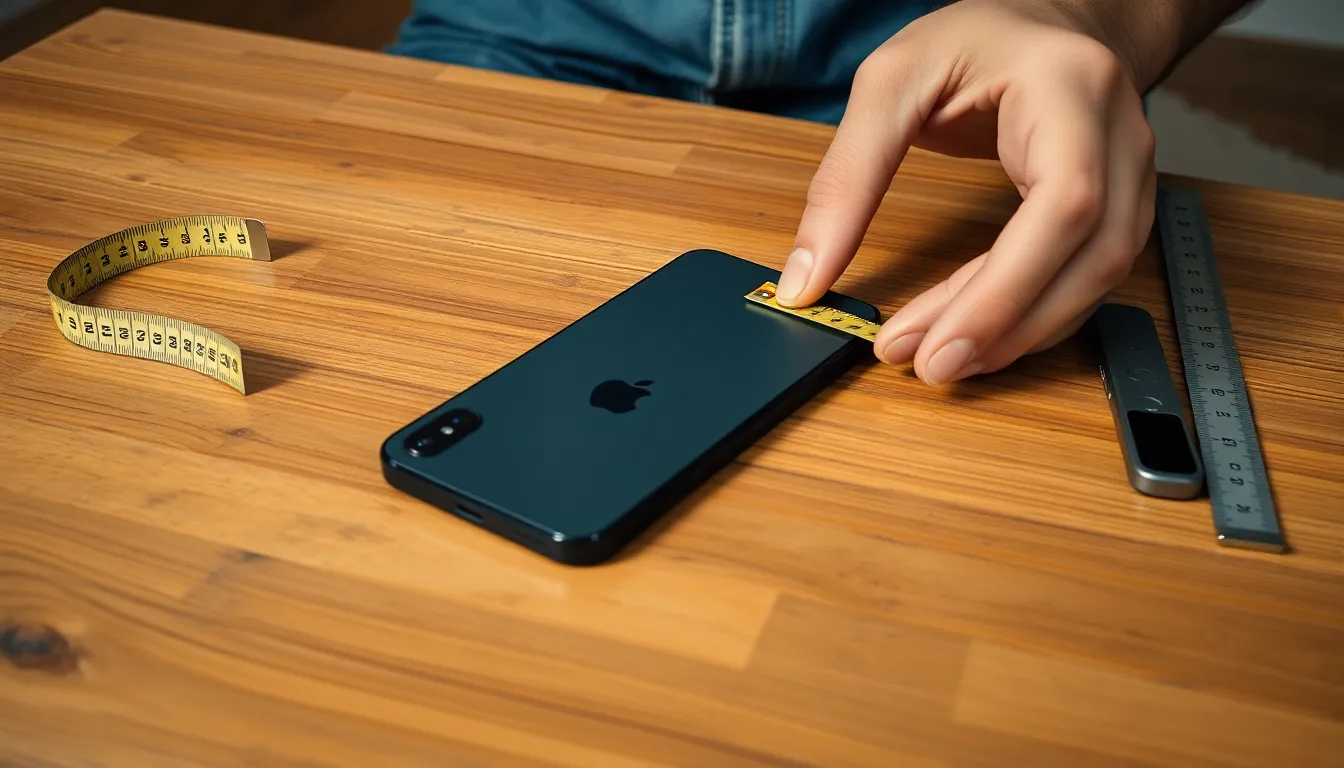
In a world where smartphones have become an extension of ourselves, knowing your iPhone’s size can save you from some serious mishaps. Whether you’re trying to find the perfect case or just want to impress your friends with your tech-savviness, measuring your iPhone isn’t just a task—it’s an adventure!
Table of Contents
ToggleTools Needed To Measure iPhone Size
Measuring an iPhone requires a few handy tools. The right instruments ensure accuracy and ease throughout the process.
Measuring Tape
A measuring tape provides flexibility when measuring the iPhone’s dimensions. Open the tape fully for precise length and width readings. Make sure to start from one edge and stretch to the opposite edge for accuracy. In most cases, tapes are available in various materials, such as plastic or cloth, which can aid in capturing dimensions effectively. Opt for one that features both metric and imperial units to accommodate different preferences.
Ruler
Using a ruler offers a straightforward approach to determine an iPhone’s size. Align the ruler along one edge of the device for a clear measurement. This tool provides easy access to both inches and centimeters. A plastic or metal ruler can yield consistent results. It’s essential to ensure the ruler lies flat against the surface of the iPhone for an accurate reading. Repeat the process for both length and width to gather complete size information.
Digital Calipers
Digital calipers present an advanced method for measuring an iPhone’s size. These tools deliver precise measurements, often down to a fraction of a millimeter. Engage the calipers by positioning them around the iPhone to capture its dimensions. Results display on an easy-to-read digital screen, simplifying the measurement process. In many cases, digital calipers can switch between metric and imperial measurements. They provide the most accurate sizing, particularly beneficial for tech enthusiasts and professionals needing detailed specifications.
Step-by-Step Guide On How To Measure iPhone Size
Measuring an iPhone size requires a few simple steps. Collect the right tools, like a measuring tape or ruler, to ensure accuracy.
Measuring The Length
To measure the length, position the iPhone on a flat surface. Start at the top edge and extend the measuring tape or ruler down to the bottom edge. Record the measurement in centimeters for precision. For instance, an iPhone 14 measures approximately 14.67 cm in length. Accurate readings ensure users find cases that fit properly.
Measuring The Width
Width measurement involves placing the iPhone upright on its side. Align the measuring tool from one edge of the device to the opposite edge. This measurement commonly reads around 7.07 cm for an iPhone 14. Noting this detail helps in selecting accessories designed for the correct specifications.
Measuring The Thickness
Measuring thickness requires placing the iPhone on its back for stability. Insert the ruler or calipers between the back surface and opposing edge. The iPhone 14 thickness measures about 0.78 cm. Knowing this dimension aids in understanding how the device fits in pockets or cases.
Understanding iPhone Size Dimensions
Knowing the specific dimensions of iPhone models helps users make informed decisions when purchasing accessories. Dimensions vary across models, making it essential to recognize the differences and measure correctly.
Differences Between Models
Various iPhone models showcase distinct size dimensions. For instance, the iPhone 14 measures 14.67 cm in length, while the iPhone 13 is slightly smaller at 14.67 cm. Width also differs; the iPhone 14 features a width of 7.07 cm, contrasting with the iPhone 12’s 7.14 cm. Thickness plays a role, too—the iPhone 14 has a thickness of 0.78 cm compared to the iPhone 13’s 0.76 cm. Recognizing these variations ensures fitting cases and accessories can be chosen accurately.
Importance Of Accurate Measurements
Accurate measurements prevent compatibility issues with accessories. For example, a miscalculated dimension may lead to the purchase of an ill-fitting case. Cases made for each specific model closely conform to precise dimensions. Sufficient measurements assist in avoiding frustrations like returning poorly fitting accessories. Proper size knowledge enhances user satisfaction in selecting everyday gear.
Tips For Accurate Measurements
Measuring an iPhone accurately involves attention to detail. Implementing the right techniques enhances measurement precision.
Ensuring Straight Edges
Keep the measuring tool aligned with the edges. Position the iPhone on a flat, stable surface to avoid misalignments. Check that the tape or ruler stays straight against the device for the most accurate length, width, and thickness readings. Using a rigid ruler allows for consistent edge alignment. Digital calipers also provide straight measurements, minimizing user error.
Avoiding Errors With Curved Surfaces
Curved surfaces on an iPhone can complicate measurements. To mitigate errors, focus on the device’s flat edges when measuring. Begin at the start of a curve, moving along to the nearest flat surface. Use flexible measuring tapes to encompass curves accurately if necessary. Double-check measurements, as slight discrepancies may occur due to the curves. Ensuring measurements are taken from effective points prevents compatibility issues when selecting accessories.
Knowing how to measure an iPhone’s size is essential for anyone looking to buy accessories or simply showcase their device knowledge. By using the right tools and following the outlined steps, users can easily capture accurate dimensions. This not only helps in selecting compatible cases but also enhances the overall experience of owning an iPhone.
Attention to detail and careful measurement practices can prevent the frustration of mismatched accessories. With a little effort, anyone can confidently navigate the world of iPhone sizes and make informed decisions that enhance their smartphone experience.