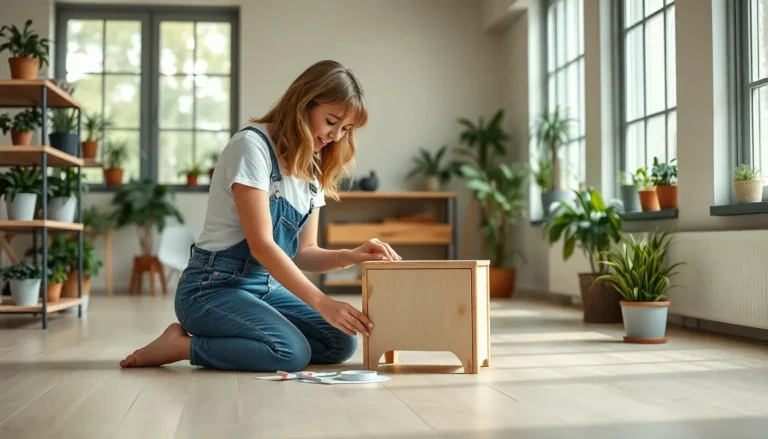
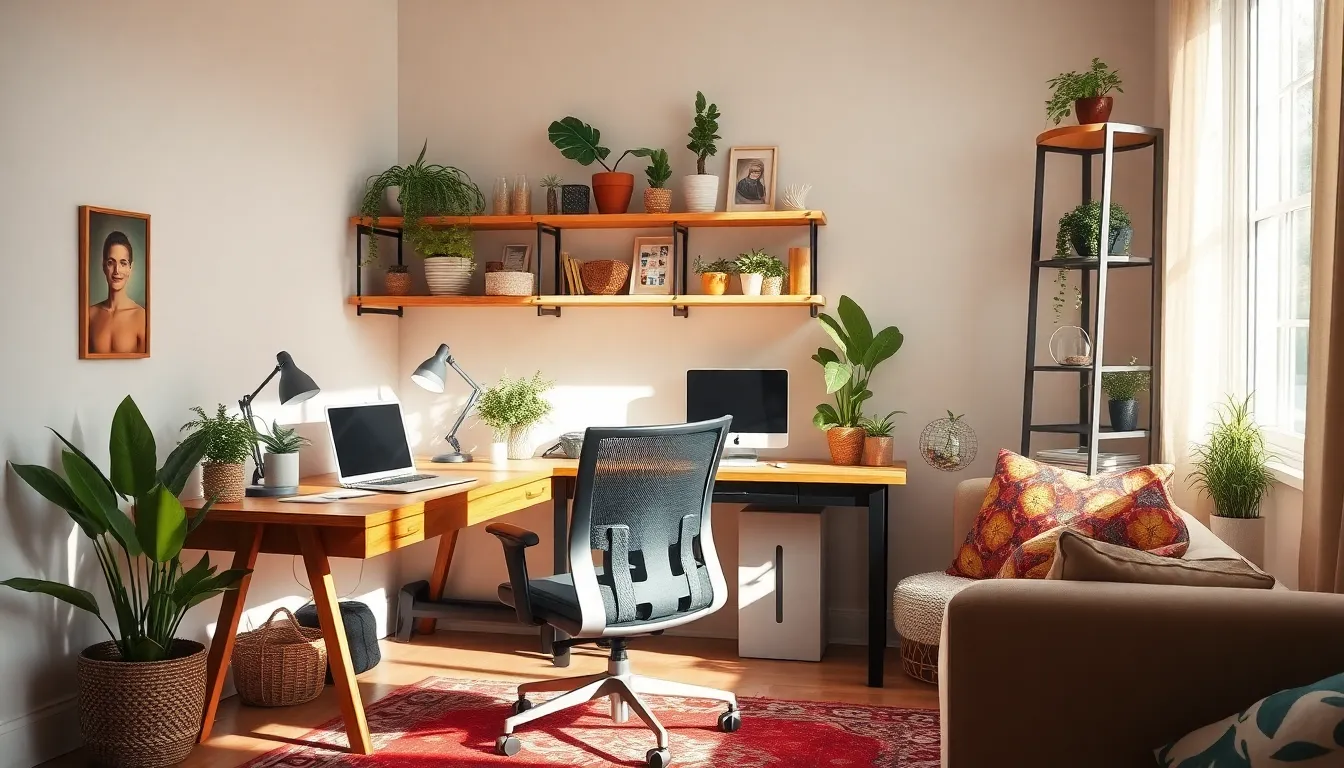
In today’s world, working from home is as common as finding mismatched socks in the laundry. With remote work on the rise, creating a DIY home office that sparks joy and productivity has never been more crucial. Imagine transforming a corner of your living room into a workspace that not only fuels creativity but also makes you feel like a boss—without the corporate coffee machine.
Table of Contents
ToggleEssential Elements of a DIY Home Office
Creating a functional DIY home office involves thoughtful planning and essential components that enhance productivity. Focus on these key elements to establish an effective workspace.
Choosing the Right Location
Selecting the ideal spot for a home office starts with recognizing space availability. Opt for an area with minimal distractions, such as a spare room or a quiet corner in the living space. Natural light boosts mood and productivity; therefore, positioning the desk near a window serves multiple purposes. Consider the proximity to household activities as well. A location where it’s easy to concentrate without frequent interruptions supports a better working environment.
Necessary Equipment and Supplies
Essential supplies contribute significantly to a productive workspace. Invest in a sturdy desk that fits the chosen location and provides ample space for tasks. A comfortable office chair supports long hours of use, promoting good posture. Technology plays a vital role; high-speed internet and a reliable computer are crucial for remote work. Moreover, tools such as notebooks, pens, and desk organizers keep ideas and materials handy. Proper lighting, like desk lamps or overhead lights, creates an inviting atmosphere and improves visibility for efficient work.
Design Ideas for a Functional DIY Home Office
Creating a functional DIY home office requires attention to detail, focusing on elements that inspire productivity and comfort. Implementing thoughtful design can significantly enhance workflow and daily motivation.
Color Schemes and Aesthetics
Choosing the right color scheme promotes a conducive working environment. Soft, neutral tones like beige or light gray create a calming backdrop. Vibrant hues such as blue or green stimulate creativity and help with focus. Selecting accent colors for accessories and decor adds personality without overwhelming the space. Incorporating artwork or plants contributes to an inviting atmosphere, where natural elements foster a connection to the outside world. Consider using removable wallpaper for a quick change that revitalizes the area. Every choice should reflect personal style while optimizing for functionality.
Organization and Storage Solutions
Efficient organization plays a pivotal role in maintaining productivity. Utilizing shelves maximizes vertical space and keeps essential items accessible. Drawer organizers can declutter the workspace, helping find supplies quickly without hassle. Implementing desktop organizers ensures the work surface remains clear, enhancing focus. In addition, using multifunctional furniture, like a desk with built-in storage, combines utility with style. Labeling bins and folders adds an extra layer of efficiency, making it easier to locate documents. By prioritizing organization, the DIY home office transforms into a streamlined environment that encourages success.
Tips for Creating a Productive Environment
Creating a conducive workspace enhances focus and productivity. Consider these key aspects to optimize your DIY home office.
Ergonomics and Comfort
Ergonomics play a crucial role in maintaining productivity. Opt for an adjustable chair that supports the lower back, aiding comfort during long hours. Position the monitor at eye level to reduce strain on the neck. Desks should allow for proper arm positioning, ensuring a relaxed typing posture. Accessories like wrist supports and footrests enhance comfort further. Implementing these small changes creates a more enjoyable work environment, ultimately improving work efficiency.
Minimizing Distractions
Minimizing distractions enhances overall focus. Designate a specific area solely for work, signaling a clear boundary between personal and professional life. Utilize noise-canceling headphones to block out environmental sounds. Keeping digital devices on silent mode prevents interruptions from notifications. Organizing the workspace helps eliminate visual distractions. For those with family or roommates, communication about work hours fosters understanding and respect for uninterrupted time. By strategically addressing distractions, achieving a more productive workday becomes attainable.
Budget-Friendly DIY Home Office Hacks
Creating a comfortable and functional DIY home office doesn’t have to break the bank. Simple adjustments and thoughtful choices can transform a space into an inspiring workspace.
Upcycling and Repurposing
Upcycling items from home presents a cost-effective way to enhance a DIY office. Old furniture can serve new purposes; for instance, a vintage table can become a stylish desk. Consider transforming milk crates into storage solutions or using a wooden ladder as a unique bookshelf. Creativity is essential; repurpose glass jars as organizers for pens and supplies. By thinking outside the box, individuals can minimize waste and inject personal flair into their home office.
Affordable Decor Options
Affordable decor plays a vital role in creating an inviting office environment. Wall art can easily be sourced from local thrift stores or printed at home. Adding plants contributes not only to aesthetics but also improves air quality; low-maintenance succulents or snake plants work best for busy schedules. Incorporating colorful textiles, such as throw pillows or rugs, can brighten up the space without significant expense. Consider DIY projects like painting or stenciling to personalize items and make the workspace truly unique.
Creating a DIY home office is more than just a trend; it’s a necessity for those embracing remote work. By thoughtfully designing a workspace that reflects personal style and meets functional needs, individuals can significantly enhance their productivity and overall well-being.
Incorporating elements like ergonomic furniture and effective organization can lead to a more enjoyable work experience. With budget-friendly hacks and creative touches, anyone can transform their living space into a professional and inspiring environment.
Ultimately, a well-planned DIY home office not only supports work efficiency but also fosters a sense of belonging and creativity, making remote work a fulfilling endeavor.